Loading books…
KES 300
Categories: Entrepreneurship, Motivational, Teens
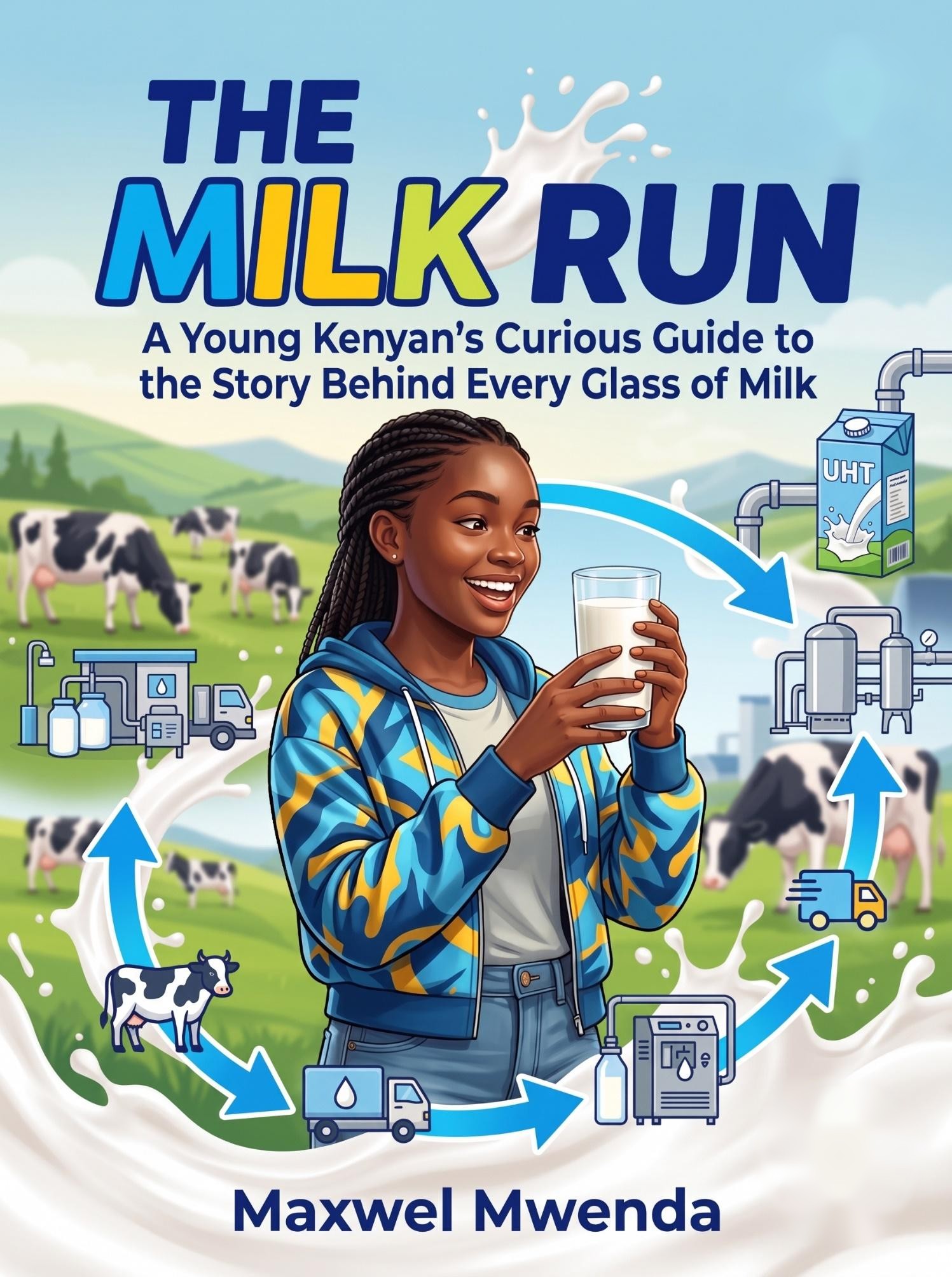
The Milk Run: A Young Kenyan's Curious Guide to the Story Behind Every Glass of Milk, by Maxwel Mwenda (Dismas Beauty Trend), is a behind-the-scenes tour of Kenya's dairy value chain for curious teens. No science or farming background is needed.
It starts with the cow. Friesians give high volumes but need good care, while Ayrshire, Guernsey, Sahiwal, Zebu and cross-breeds trade volume for hardiness. Most Kenyan milk comes from smallholders with one or a few cows, milked twice daily and reliant on good feed and water.
The book then follows milk's race against time: hygienic milking, fast cooling to about 4°C, and farm-gate tests for adulteration and acidity. Cooperatives pool milk from many small farmers, giving them bargaining power and shared chillers, while informal traders sell raw milk that skips safety steps. Insulated tankers carry bulk milk to processors.
Inside the plant, milk is tested again, filtered, pasteurized, standardized for fat, homogenized so cream doesn't separate, and packed hygienically, usually within a day. A full chapter explains UHT: brief heating well above boiling plus sterile, multi-layer aseptic cartons let milk sit unrefrigerated for months, a big deal for rural Kenya with weak cold chains.
Milk also becomes mala, yoghurt, ghee, butter, cheese and powder, each a way to lock in the value of a perishable product. The Kenya Dairy Board and KEBS, guided by Codex Alimentarius, license processors and set safety standards. Dairy gives millions of households near-daily income and creates jobs in transport, processing, feed, vet services and packaging.
Careers span food science, engineering, animal health, business and regulation. A mythbusting chapter tackles claims about UHT preservatives, raw milk being healthier, all brands being equal, expiry dates and dairy as low-skill work. Each chapter ends with a "Try this" prompt, and the conclusion invites readers to see the ordinary glass of milk more clearly.